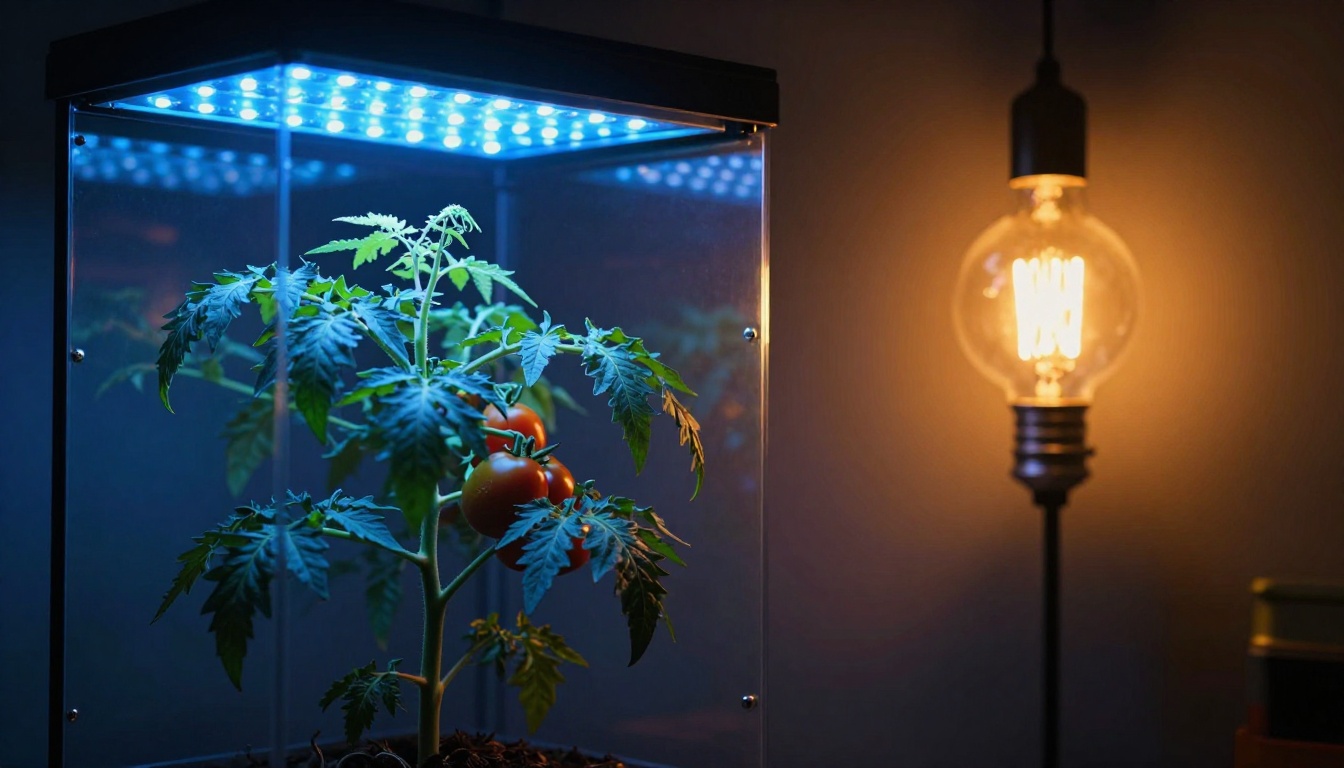
Picture this: Jake, a first-time indoor gardener, struggled with spindly tomatoes under old fluorescent tubes. He switched to the right grow light and doubled his harvest in one season. That simple change boosted growth, cut his electric bill, and saved his plants.
You face the same choice now. LED and high-pressure sodium (HPS) grow lights power most indoor setups, but they differ in ways that hit your wallet, space, and yields. LEDs use diodes to emit targeted light waves, while HPS bulbs burn sodium gas for intense glow. Pick wrong, and plants stretch thin or burn up. Pick right, and you get thick buds or lush leaves.
This guide breaks it down. You’ll learn how each works, their strengths and weaknesses, key comparisons, and factors for your setup. By the end, you’ll know exactly which fits your grow tent or closet. Let’s get your plants thriving.
How LED Grow Lights Work and Why They’re Popular
LED grow lights draw beginners because they mimic sunlight without the hassle. Small diodes light up when electricity flows through them. You get precise wavelengths for every plant stage, from seedlings to harvest.
Modern LEDs pack full-spectrum output. They blend blue for strong stems in vegetative growth and red for fat flowers later. No need to swap bulbs. They last over 50,000 hours, so you buy once and forget replacements for years.
Think of LEDs like your phone screen: efficient, cool, and always ready. Home growers love the plug-and-play setup. No heavy ballasts or wiring headaches. They fit small tents perfectly.
The Light Spectrum Edge of LEDs
Plants crave specific colors, much like kids need veggies and protein for balanced meals. LEDs deliver blue light around 450nm for compact vegetative growth. Red at 660nm pushes flowering and bigger yields.
In contrast, older lights skew one way. Newer LEDs let you dial in ratios or buy pre-tuned panels. This balance means healthier plants overall. Leaves stay green, roots dig deep, and buds swell even.
You see faster cycles too. Tomatoes finish weeks early under full-spectrum LEDs. Beginners avoid guesswork because the light handles all stages.
Energy Efficiency and Cool Operation
LEDs shine in power use. They convert 40 to 50 percent more electricity to light than rivals. A 300W LED matches a 600W old-school light but sips half the juice.
They run cool as well. No scorching heat means less fan noise or AC costs in your tent. For safety, this cuts fire risks in tight spaces.
Take a quick math example. At $0.12 per kWh, a 300W LED costs about $30 yearly for 18 hours daily. Double that for equivalents elsewhere. Beginners save big and stress less over setup.

High-Pressure Sodium Lights: The Classic Powerhouse
HPS lights have powered pro grows for decades. They fill a glass tube with sodium gas and zap it with high voltage. This creates a bright yellow-orange blast perfect for late stages.
Upfront costs stay low at $50 to $100 per bulb. Fixtures hit hard in big rooms, penetrating canopies deep. Budget growers grab them for quick yields on flowers.
However, they demand care. Ballasts regulate power, and vents fight heat. Picture a stadium floodlight: powerful output, but it warms the field fast. Still, they deliver for those chasing max buds.
Ideal Spectrum for Flowering Plants
HPS peaks in red and orange waves from 550 to 650nm. This triggers bud sites and resin on peppers, tomatoes, or cannabis. Yields stack up dense and heavy.
Blue light lags, so pair with other bulbs for early veg. Pros stick to HPS here because it packs punch per watt in bloom. One 1000W unit covers 16 square feet with thick results.
Plants respond fast. Flowers swell because the spectrum matches nature’s fruiting cues. You get reliable heft if you manage the rest.
Handling the Heat and Power Draw
Heat pours off HPS like a space heater. Plan 100 watts per square foot, plus exhaust fans. Poor airflow yellows leaves or wilts stems.
Power pulls heavy too. A 1000W setup rivals your dryer on the circuit. Bulbs last 10,000 to 24,000 hours, so swap yearly at $20 each.
Set up right, and it works. Beginners add inline fans early. Good ventilation keeps temps at 75 to 85 degrees for peak growth.
LED vs HPS: Head-to-Head on What Really Counts
Both lights grow winners, but trade-offs matter. LEDs win versatility; HPS brings raw flowering force. Here’s a quick comparison to spot differences.
| Feature | LED Grow Lights | HPS Grow Lights |
|---|---|---|
| Spectrum | Full (blue, red, all stages) | Red/orange (best for flowering) |
| Efficiency | 2.5-3 µmol/J, 40-50% less power | 1.5-2 µmol/J, high draw |
| Heat Output | Low, minimal cooling needed | High, requires strong ventilation |
| Lifespan | 50,000+ hours | 10,000-24,000 hours |
| Initial Cost | $200-500 per 300W equivalent | $100-300 per fixture |
| Yield Potential | Even growth, high in small spaces | Dense buds in large areas |
This table shows clear winners by need. In 2026, LED prices drop as diodes improve. Both match yields with smart use.
Upfront and Ongoing Costs Breakdown
LEDs cost more at first. A solid 4×4 tent panel runs $300. But low power flips it long-term.
HPS starts cheap. Yet double energy use adds up. For a 4×4 space at $0.12/kWh and 18 hours daily, HPS racks $80 yearly versus $40 for LED. Add $20 bulb swaps.
Over three years, LED saves $150 plus. Factor electricity hikes; savings grow. Beginners pick LED to avoid surprises.
Impact on Yields and Plant Health
Yields tie if you match light to stage. LEDs promote bushy plants with less stretch. HPS packs denser flowers but leggy veg without help.
Health edges to LEDs in small spots. Even coverage cuts hotspots. HPS excels in bloom phases for pros. Test your plants; both deliver 1-2 grams per watt.

How to Pick the Best Light for Your Grow Setup
Start with your space and goals. Small closet? Go LED for cool ease. Big garage with vents? HPS handles volume.
Budget under $200 favors HPS starters. New growers pick LED because it forgives mistakes. Aim 30 to 50 watts per square foot for LEDs, 50 to 100 for HPS.
Ask yourself: Do you grow all stages? LED wins. Flower only? HPS saves cash. Hybrids mix both for best results.
Matching Lights to Your Plants and Space
Leafy greens or veg need blue-heavy LEDs. Flowers like tomatoes thrive under HPS red push.
A 2×4 tent takes one 150W LED panel. Garage ops fit 600W HPS with fans. Check coverage charts from makers. Overlap edges for even light.
Scale to plants. Herbs suit 200W LED; big fruits need 1000W HPS power.
Beginner Tips to Maximize Any Light
Hang lights 18 to 24 inches above canopy. Use timers for 18/6 veg or 12/12 flower cycles.
Add reflective walls to bounce light. Watch for burn; raise HPS higher if tips curl. Start at half power to test.
Avoid pitfalls like poor wiring. Clean fixtures monthly. These steps boost any light 20 percent.
Your harvest depends on smart tweaks. Measure success by healthy nodes weekly.
Final Thoughts on LED vs HPS for Your Grow
No light rules all grows. LEDs suit modern beginners with efficiency and ease. HPS powers budget flower chasers who handle heat.
Jake from our start now pulls three times his first crop under LEDs. Match your pick to space, plants, and wallet.
Check your tent size today. Grab an LED for simple wins, or HPS if yields top your list. Share below: Which light calls to you? Happy growing awaits fat harvests.