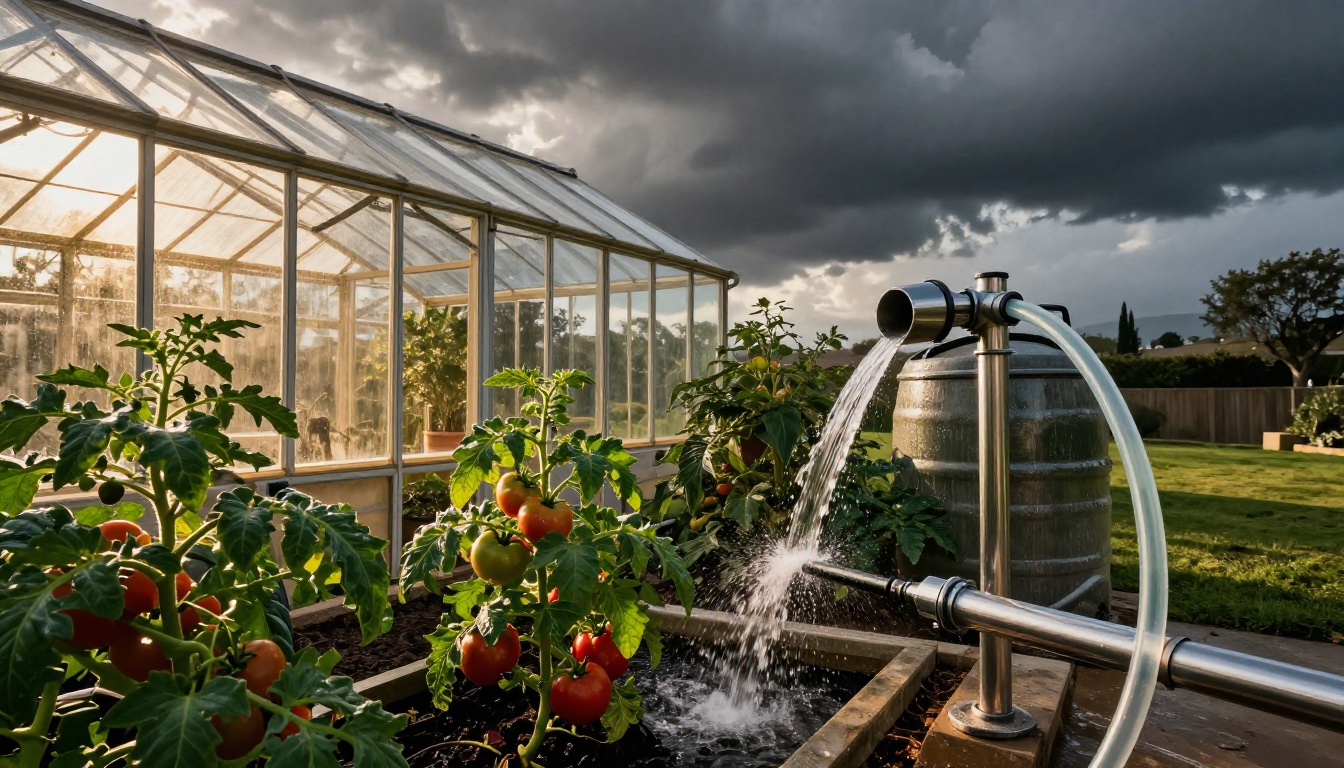
Imagine a backyard gardener in California who cut water bills by 70 percent last year. Droughts hit hard in 2026, yet their greenhouse tomatoes grew lush with free rainwater. You can do the same.
Rainwater harvesting offers a smart fix for irrigation. It skips chemicals and high costs from city water. Plus, it fits organic setups perfectly.
This guide covers benefits, collection setups, filtering steps, connections to drip lines, and maintenance. You’ll get real steps to start today.
Why Rainwater Gives Your Greenhouse Plants an Edge
Rainwater beats tap water hands down for greenhouses. It lacks chlorine, which harms beneficial microbes in soil. Plants absorb nutrients better as a result.
Costs drop fast too. Municipal rates rose 15 percent nationwide in 2026. Rain stays free after setup.
Sustainability shines here. You cut runoff pollution and mimic natural rain for strong roots. Tomatoes, for example, yield 20 percent more in tests.
Here’s a quick look at tap versus rain:
| Feature | Tap Water | Rainwater |
|---|---|---|
| Chlorine | High, kills soil life | None |
| Salts/Minerals | Builds up over time | Minimal |
| pH Level | Often alkaline | Neutral, ideal for most |
| Cost per 1,000 gal | $5-10 (2026 avg) | Free after install |
Rainwater wins for health and wallet. Greenhouse owners report fewer pests too.
Healthier Plants from Chemical-Free Water
Tap water carries salts and fluoride. These build up in pots and stunt roots. Rainwater skips that problem.
Nutrient uptake improves right away. Roots stay healthy, so diseases drop. One Oregon grower switched and doubled basil harvests.
Your plants thank you with vigor. Leaves stay green, fruits swell bigger.
Big Savings on Your Water Bill
A mid-size greenhouse guzzles 10,000 gallons yearly. At $7 per 1,000 gallons, that’s $70 minimum.
Rain covers it all for free. Setup runs under $500. Payback hits in one season.
Water bans spread in 2026 from droughts. Rain keeps you growing without fines.
Picking the Right Setup to Capture Every Drop
Start by measuring your greenhouse roof. A 10×20 foot roof catches 600 gallons per inch of rain. Check local averages; many spots get 30-40 inches yearly.
Choose tanks wisely. Food-grade barrels work for small spaces. IBC totes hold more for bigger needs.
Key parts include leaf guards and overflow pipes. Place tanks level on gravel bases. Plan overflows to a dry well.
Calculate storage: aim for two weeks’ worth based on your plants’ thirst.
Best Tanks and Barrels for Your Space
55-gallon drums suit starters. Stack two for 110 gallons under eaves.
Larger greenhouses need 275-gallon IBCs or 1,000-gallon cisterns. Position near downspouts for easy gravity flow.
Buy food-grade only. Skip ones marked non-potable, even for irrigation.
Tools You Will Need Before Starting
Gather basics first. PVC pipes and elbows run $20. Screen mesh and sealant add $30.
A drill with bits costs little if you lack one. Gloves and level keep work safe.
Total hits $200-400. Shop hardware stores for deals.
Step-by-Step: Building Your Collection System
Pick a dry day to build. Secure everything tight against wind.
Gutters catch roof runoff. Screens block leaves at every inlet. Mosquitoes stay out too.
Add a first-flush diverter. It dumps the dirty first water each storm.
- Measure roof edges for gutter length.
- Attach gutters with brackets every two feet.
- Slope them 1/4 inch per 10 feet toward downspouts.
- Route downspouts to tank inlets.
Test flow after rain. Adjust as needed.
Install Gutters and Direct the Flow
Screw gutters to roof fascia. Use hangers for support.
Connect downspouts with elbows. Lead straight to tanks, at least 5 feet away from walls.
Seal joints with silicone. No leaks means full tanks.
Set Up a First-Flush to Skip the Grime
Build a simple standpipe diverter. It holds 20 gallons of startup runoff.
Water fills it first, then overflows to the tank. Tip it to empty between storms.
This cuts roof grime by 90 percent. Clean water follows every time.
Simple Ways to Filter Rainwater for Safe Use
Filters turn murky runoff into clear irrigation gold. Skip drinking standards; focus on plant-safe.
Coarse screens grab leaves first. Sediment filters catch fine dirt next.
Mesh from 1/8 inch down to 100 micron works best. Inline units fit hoses easy.
Test pH often; roofs can acidify water. Adjust with lime if below 6.0.
Coarse Screens to Block Big Debris
Fit window screen over inlets. Hardware cloth adds strength.
Clean weekly to avoid clogs. Debris piles fast in storms.
Overflows need screens too. Blocks nests and junk.
Fine Filters for Crystal Clear Water
Add spin-down filters after tanks. They whirl out sand hourly.
Cartridge types last months. Backflush with a hose.
Budget picks under $50 handle 1,000 gallons easy.
Extra Steps for Sparkling Results
Aerate stored water to fight algae. A small fountain pump stirs it.
UV lights kill bugs if tanks sit full long. Shade helps most.
Check clarity by pouring a glass. Cloudy means filter time.
Hook It Up to Your Greenhouse Drip Lines
Gravity rules if you elevate tanks 5-10 feet. Pressure matches city lines.
Low roofs need pumps. Solar submersibles run quiet and green.
Connect with 1/2-inch hoses to timers. Emitters space 12 inches apart.
Flow at 0.5 gallons per hour per plant. Even coverage prevents dry spots.
Drain lines before freezes. Insulate pipes in cold zones.
Gravity Feed or Pump? Choose Wisely
Raise tanks on platforms for free pressure. Simple and reliable.
Pumps shine for flat setups. Solar ones charge by day, run at dusk.
Match pump to 20-50 PSI for drips. Test pressure first.
Keep Your System Running Smooth Year-Round
Check monthly. Clean screens, tighten seals, run full tests.
Winterize by draining all. Refill in spring.
Use UV-resistant plastic. Lasts 10 years plus.
Most states allow harvesting in 2026. Check local rules for big systems.
Spot and Fix Common Problems Fast
Algae greens up tanks. Shade them; add copper pennies.
Clogs slow flow. Disassemble and hose filters.
Leaks show at seals. Dry, then silicone over.
Catch issues early for zero downtime.
Rainwater irrigation transforms your greenhouse. You collect from roofs, filter simply, and drip to plants. Bills shrink, yields grow.
Start small this season. One barrel proves the point.
Share your setup in comments. Subscribe for more tips.
Sustainable gardening builds the future, one drop at a time.