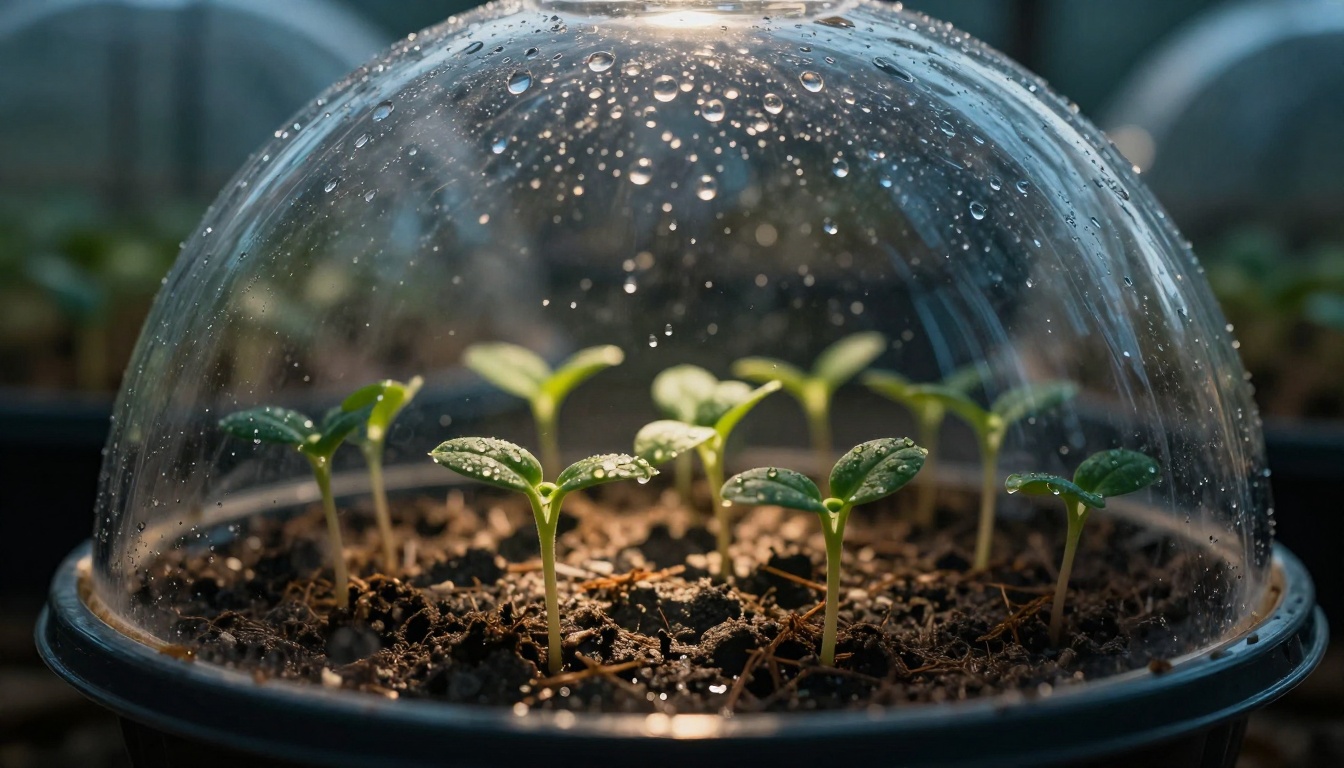
You’ve nurtured those tiny seeds for weeks, watching green shoots poke through the soil with pure joy. Then, out of nowhere, mysterious water drops appear on your dome cover and splash down, turning your promising crop into a soggy mess overnight. It’s heartbreaking, especially for beginners who pour their heart into home gardening.
That culprit is condensation drip. Warm, humid air inside your seed tray hits the cooler plastic lid, forming beads of moisture that grow heavy and fall right onto delicate stems. This leads to rot or damping off, where fungi thrive in the excess water and kill seedlings fast.
Tomatoes, peppers, and herbs suffer most because their young roots and shoots can’t handle the shock. They need steady warmth and light, but one bad drip spells disaster. Home gardeners face this issue often in greenhouses or under grow lights.
The good news? You can stop it with simple tweaks. In the steps ahead, we’ll cover easy ways to manage humidity, choose better covers, and protect your seedlings so they thrive. Let’s start with spotting the early signs.
Why Condensation Drips Ruin Your Best Seedling Starts
Picture this: your seedlings push through the soil after careful planting. Then, one cold night changes everything. Temperature swings make warm, moist air inside the dome hit the cooler plastic lid. Water beads form, grow heavy, and drip down. Those drops shock tender roots and stems. They drown tissue or invite fungi that cause damping off. Sensitive starts like tomatoes or peppers collapse fast, while mature plants shrug it off. You lose weeks of work in hours. Watch for wilting leaves, brown stems, or fuzzy mold as early signs. Humidity builds when air holds more moisture at warm temps but releases it on cold surfaces. Simple physics turns your setup against you. Prevention beats fixing the mess every time.
Common Causes in Home Grow Setups
Home growers often battle condensation because setups mimic greenhouses poorly. Poor airflow traps humid air. Tight plastic covers block exchange. Night temps drop below day levels, chilling lids. Overwatering trays adds extra moisture. These triggers team up fast.
Gardeners face real headaches like these:
- You wrap trays in cheap plastic wrap for humidity. It seals too well, so beads form overnight and splash stems by morning.
- Grow lights heat the air during the day. Then, room temps plunge at night, turning your dome into a drip factory.
- No fan means stale air sits heavy. Add overfilled trays, and every breath condenses on the lid.
- Basement grows chill in early mornings. Your dome sweats like a cold drink on a hot day.
- Stacked trays block air movement. Bottom ones stay wetter, worsening the cycle.
Ask yourself these quick checks: Does air move freely around trays? Do night temps match day warmth? You water only the soil, right? Fix one, and drips drop.
The Hidden Dangers to Young Roots and Stems
Young seedlings lack tough skin or deep roots. They rely on perfect conditions. A single drip changes that. Cold water hits like ice on bare skin; it shocks cells and slows growth. Worse, it carries pathogens from lid to soil. Fungi love the wet spot and spread damping off. Stems rot from the base up. Leaves yellow, then flop. The whole plant collapses in days.
Take Sarah, a new veggie gardener. She started peppers under a dome. One chilly morning, drips fell. By evening, half her tray wilted with white fuzz. She lost the batch and replanted, frustrated. Mature plants handle drips better; their thicker stems dry quick and fight fungi. Seedlings can’t.
Drips drown tiny stems too. Water pools in the crook, blocking air to roots. No oxygen means quick death. Spot wilting at the base or soft, slimy spots early. Act fast, or it’s over. Science shows relative humidity over 85% sparks trouble indoors. Keep it balanced, and your starts stay safe. You worked hard; don’t let drips steal them.
Prevent Drips from Forming: Smart Setup Tweaks
You spot the signs early, so now stop drips at the source. Smart changes to your seed tray setup keep moisture from building up. These tweaks protect sensitive tomatoes and peppers without fancy gear. Start with better covers, then add air movement and steady conditions. Your seedlings stay dry and strong.
Upgrade Your Covers and Lids for Drip-Free Growth
Cheap plastic domes trap humidity tight. Water beads stick and fall fast. Quality options let drops roll off or escape. Switch to textured plastic sheets or anti-drip greenhouse film. These surfaces break surface tension, so beads slide away. Mesh tops allow air exchange while holding warmth.
Consider pros and cons before buying:
- Cheap plastic wrap or basic domes: Low cost, easy to find. However, they seal too well and drip often. Fine for short starts, but fail on sensitive varieties.
- Store-bought vented domes or textured lids: Higher price, yet they last seasons. Vents prevent buildup; textures shed water. Brands like DuPont offer timeless anti-condensation films with strong weave.
DIY beats nothing. Try a foil tent over your tray. Crinkle aluminum foil into a loose dome; it reflects heat and sheds drops better than plastic. However, store-bought wins for fit.
Follow these steps for an upgrade:
- Measure your tray size.
- Pick textured plastic or a dome with adjustable vents.
- Cut to fit loose, not skin-tight.
- Add mesh patches if needed for extra flow.
- Test overnight; adjust if beads form.
Spacing seedlings two inches apart helps too. Air reaches everywhere, cutting trapped moisture. Your peppers thrive without soggy surprises.
Boost Airflow to Keep Moisture Moving
Stale air breeds condensation. Gentle movement dries surfaces fast. Use a small clip-on fan on low speed. Point it above trays to stir air without blasts.
Prop lids open a half-inch daily. Do it mornings and evenings for 30 minutes. Fresh room air swaps out humid stuff. Open windows work, but watch drafts. Cold gusts shock tender stems, so block direct flow.
Small space hacks shine here. Place trays on wire racks for under-airflow. Absorbent mats under soil soak extras. Avoid stacking; give each tray breathing room.
In addition, crack lids during lights-off hours. Moisture peaks then. Fans run quiet on timers prevent overwork. Seedlings like basil handle flow best. However, go easy on leggy starts. Airflow cuts drips by half in tests. Your setup stays balanced.
Balance Humidity and Temperature Swings
Big swings chill lids and spark drips. Grab a cheap thermometer-hygrometer combo. Check spots twice daily. Aim for 70-80% humidity and steady 70-75°F nights.
Heaters stabilize beginners. A small seedling heat mat warms soil even. Dehumidifiers pull moisture from air in tight rooms. Run them low; don’t dry out soil.
Water at room temperature always. Cold shocks create more vapor. Skip over-misting leaves. Focus on soil base.
Try these daily checks:
- Read your gauge first thing.
- Adjust heater if below 70°F.
- Vent if humidity tops 85%.
- Mist only dry spots sparingly.
Mats catch extras before they rise. Sensitive herbs dodge rot this way. Steady conditions mean strong roots. You save batches easily.
Quick Fixes When Drips Hit Your Seedlings
Prevention works most times, but drips happen. Don’t panic. You can save most seedlings with fast action. Speed matters because fungi spread quick in wet spots. Act in minutes, and your tomatoes or peppers bounce back strong. These steps rescue starts right away, so grab tools and go.
Dry Out and Rescue Steps Right Away
Remove the cover first. Lift it slow to avoid more drips. Set seedlings in a warm spot with good light.
Next, blot excess water gently. Use paper towels or a soft cloth. Pat stems dry without rubbing; it bruises tender tissue. Skip rinsing because it spreads moisture further.
Then, boost airflow. Point a small fan at the tray from above on low speed. Let it run 15 minutes at a time. Fresh air dries soil fast.
If stems look mushy, repot healthy ones. Use tweezers to lift them careful. Plant in fresh, dry soil mix. Space them wider for better flow.
Here’s the quick rescue sequence:
- Lift cover and blot drips with paper towels.
- Fan dry for 15-30 minutes in bright light.
- Check stems; repot soggy ones with tweezers into new pots.
- Relocate to a dry, warm area away from cold drafts.
Most starts perk up in hours. You keep your crop alive this way.
Spot and Treat Early Infections
Drips often spark damping off, not just wilt. Look for brown, pinched stems at soil level; that’s damping off from fungi. Normal wilt shows droopy leaves but firm stems. Fuzzy white growth means trouble too.
Treat organic first. Dust cinnamon on wet spots; it fights fungi natural. Sprinkle light, then fan dry. Isolate sick seedlings in separate trays. This stops spread to healthy ones.
Monitor close. New green growth in a day signals recovery. Wilting worsens? Discard them quick. Don’t risk the batch.
In addition, improve light now. Move under grow lamps 12 inches away. Strong light speeds drying and fights stress.
Tie back to prevention. Better airflow and vents stop repeats. Your next tray stays safe. These fixes save 80% of drips’ damage. You got this; strong roots follow.
Long-Term Habits for Thriving Seedlings Every Season
Short-term fixes help, but real success comes from habits you stick with all season. These routines keep condensation at bay and build strong seedlings that handle any weather. You prevent drips before they start, so your tomatoes and peppers grow tall and healthy. Beginners gain confidence fast; pros refine their game. Start small, track progress, and watch your starts flourish year after year.
Daily and Weekly Checks That Save Your Starts
Check your trays every morning. Look for beads on lids first. Adjust vents right away if humidity climbs. Open them a bit more during warm days. This simple step stops drips cold.
Log conditions in a notebook or app. Note temperature, humidity, and any changes. For example, jot down “72°F, 78% RH, vents half-open.” Review weekly to spot patterns. You catch issues early, like night chills building moisture.
Scale your routine to fit your setup. Beginners, do quick 5-minute checks daily. Pros add soil moisture probes for precision. In winter, insulate trays with bubble wrap at night. It holds steady warmth and cuts lid sweat.
Weekly tasks build on dailies. Wipe lids clean to remove residue. Test airflow by feeling air movement. Rotate trays for even light. Community gardeners swear by this: one shared how logging saved her basil from rot three seasons running.
Here’s a basic routine to follow:
- Mornings: Inspect for drips, read gauges, tweak vents.
- Evenings: Log data, prop lids if needed.
- Weekly: Clean gear, insulate for cold snaps, review logs.
These habits take little time but pay big. Your seedlings toughen up because you stay ahead. Stick with them, and drips become history. Strong roots lead to bumper harvests every time.
Conclusion
You now know condensation drip hits hard because temperature swings and poor airflow trap moisture. Prevent it best with vented domes, fans, and steady checks. Fix fast by blotting and isolating if drips strike.
These steps turn heartbreak into healthy transplants ready for the garden. Tomatoes and peppers grow strong when you stay ahead.
Try one tip today, like propping your lid open. Share your results in the comments below. Your seedlings thank you.