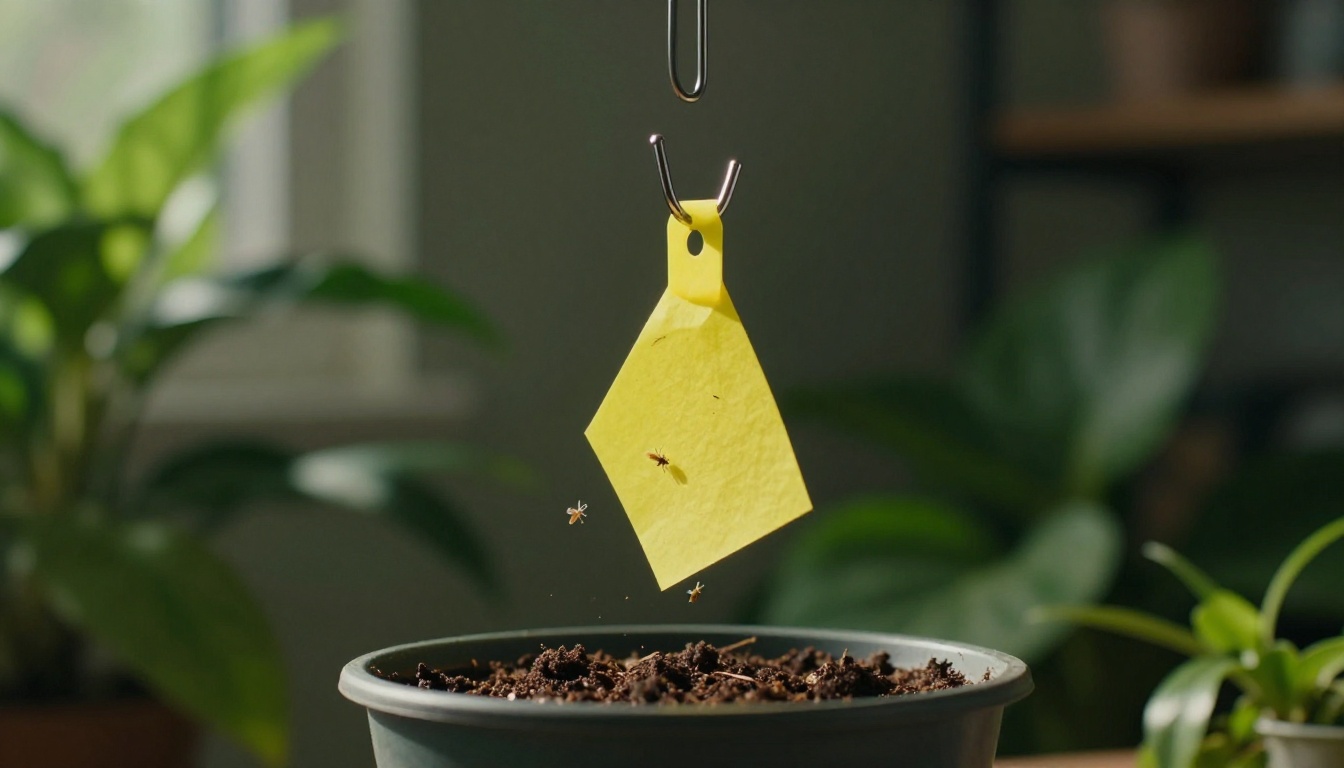
Ever spotted those tiny black flies buzzing around your houseplant soil? Or noticed silvery streaks and curled leaves on your favorites? You’re not alone; countless gardeners face this frustration as plants weaken fast.
Those flies are fungus gnats. They breed in moist soil, and their larvae munch on tender roots. Meanwhile, thrips are slim, sneaky pests that scrape leaves, leaving silver spots, black flecks, and stunted growth.
Skip early signs, and small issues explode into full infestations. Your plants suffer; replacements cost time and money. But here’s good news: yellow sticky traps offer a cheap, poison-free fix.
These traps draw in flying adults with their bright color. Adults stick and die, alerting you to trouble early. No sprays needed, so they’re safe for homes and kids.
In this post, you’ll learn to pick the best traps, place them right, monitor catches, and act fast. We’ll cover prevention tips too. Simple steps follow; grab some traps and let’s spot those pests before they win.
Spot the Signs: Fungus Gnats and Thrips on Your Plants
You need to spot these pests early. Flying adults signal trouble brewing below the soil or on leaves. Yellow sticky traps catch them first, so you know when to act. Let’s break down each pest’s tells. Clear signs help you self-diagnose fast.
Fungus Gnats: The Soil-Loving Flyers
Fungus gnats love wet soil. Females lay eggs there, up to 300 at a time. Larvae hatch in days. They feed on roots and organic matter, weakening plants from below. Adults emerge after two weeks, ready to restart the cycle.
Look for tiny black flies, about 1/8 inch long. They hover near the soil or jump when you touch the pot. Plants may wilt or yellow because roots suffer. Soil looks damp all the time; that’s their favorite spot.
Overwatered pots invite them. They thrive in high humidity too. Keep soil drier between waterings to fight back.
Yellow traps shine here. Adults can’t resist the color. They land, stick, and stop laying eggs. Catches mean larvae lurk below. If you see fuzzy black flies dancing over pots, act fast. Check traps daily.
Common signs include:
- Swarms near base of plants.
- Leggy growth from poor roots.
- Slow drainage in soggy mix.
Catching adults early breaks the cycle. No need for soil digs yet.
Thrips: Leaf-Damaging Specks You Might Miss
Thrips differ from gnats completely. These slender insects, 1/25 inch long, come in yellow or black. They fly short hops but spread quick on air currents. Adults rasp leaf cells for sap, leaving damage behind.
Spot silvery streaks on leaves first. Black dots, their frass, speckle surfaces. Leaves curl or drop flowers. New growth twists; plants stunt overall.
They hit flowers hard, causing buds to fall. Unlike gnats, thrips stay on foliage, not soil. Hot, dry spots boost their numbers.
Yellow traps grab flying adults best. They flock to the hue, just like gnats, but thrips show on upper traps near leaves. More catches mean infestation grows. If curled leaves sport black specks, inspect close.
Watch for these unique cues:
- Rasped patches turning white.
- Sticky honeydew drawing ants.
- Distorted tips on shoots.
Traps alert you before damage spreads plant to plant. Remove infested leaves next. Early spots save your greens.
Why Yellow Sticky Traps Give You the Early Edge
Yellow sticky traps spot flying pests before damage hits hard. They catch adults early, so you act fast on fungus gnats and thrips. This simple tool breaks the breeding cycle right away. You gain control without chemicals or mess. Let’s see why they work so well.
The Science That Makes Yellow Irresistible
Insects like fungus gnats and thrips see yellow as a beacon. It mimics the light plants reflect, drawing them in close. Adults fly toward it, land, and stick to the glue. No escape happens.
This trick targets their vision perfectly. Gnats hover low; thrips zip higher. Traps snag both because yellow pulls from afar. Science backs it: studies show these pests prefer yellow wavelengths most. You get alerts days before you see larvae or leaf scars.
In short, traps use nature’s cues against pests. They signal trouble early, every time.
Top Benefits Over Other Methods
Yellow sticky traps shine for home use. They stay non-toxic, safe around kids and pets. No harsh sprays mean clean air and healthy plants. You monitor catches daily, tracking infestation rise or fall.
They break the cycle too. Adults die before laying eggs, so larvae numbers drop fast. Sprays kill on contact but miss hidden spots. Traps keep working weeks without refill.
Consider this quick comparison:
| Feature | Yellow Sticky Traps | Chemical Sprays |
|---|---|---|
| Safety for kids/pets | Completely safe | Risky if inhaled or touched |
| Ease of use | Hang and check | Mix, spray, clean up mess |
| Cost | Cheap, long-lasting | Ongoing refills add up |
| Early detection | Counts adults first | Waits for visible damage |
| Plant impact | None | Possible burn or residue |
Traps win for prevention. Sprays handle outbreaks but create hassle. Choose traps first; save sprays for last resort.
Wins Straight from Gardeners Like You
Gardeners report quick wins. One user hung traps in overwatered pots. Gnat numbers plunged after one week. Plants perked up as roots healed.
Another fought thrips on orchids. Traps near leaves caught dozens daily. Curled tips stopped spreading. “It’s like an early warning system,” she said.
You can expect similar results. Place traps now, check tomorrow. Fewer flies mean you’re ahead. This edge keeps your plants thriving all season.
Traps give real data too. Ten gnats per trap signals action. Zero means success. Track progress; adjust care. Simple, right?
Choose and Prep Top Yellow Sticky Traps Fast
You need reliable traps that work from day one. Pick ones that match your setup, then prep them in seconds. This keeps you ahead of gnats and thrips without waste. Focus on size, glue quality, and packs that fit your budget. Generic brands often deliver best value. Let’s pick smart and get them ready.
Match Size and Type to Your Plants
Start with 4×6 inch traps. They cover pots well without overwhelming small spaces. Larger sheets suit greenhouses; smaller stakes fit single plants.
Stakes slide into soil easily. They stay upright near roots where gnats hover. Sheets hang from stakes or hooks for thrips higher up. Choose stakes for houseplants. Opt for sheets if you monitor multiple pots.
Packs of 20 or more save money. You replace full traps weekly, so stock up. Test one first to check fit.
Check Glue and Safety Features
Strong adhesive grabs adults fast. Look for thick, non-drying glue that lasts weeks. Avoid thin coatings; they lose stickiness quick.
Non-toxic glue matters most. It stays safe around kids and pets. No harsh chemicals mean you hang them anywhere. Read labels for “safe for indoor use.”
Durable plastic holds up in humid spots. Yellow hue stays bright; faded color loses pull.
Grab Budget Picks Under $10
Generic packs cost little but perform great. A 20-pack of 4×6 stakes runs $8 online or at stores. They catch hundreds before replacing.
Avoid fancy brands unless specified. Basics from garden centers work fine. Check reviews for real catch counts. You get value when traps fill fast and last.
Prep in Under a Minute
Unfold sheets carefully. Peel off protective paper from the sticky side. Don’t touch the glue; oils weaken it.
For stakes, snap into shape if needed. Hang sheets at plant height with clips. Push stakes 2 inches into soil center.
Wipe edges if dusty. Position away from direct fan breeze. Ready traps catch pests by evening.
Store Extras Right
Keep unused traps in a cool, dry drawer. Seal originals to block dust. They last years if protected.
Toss full ones in trash; wrap first to avoid mess. Fresh stock means quick swaps. You stay prepared all season.
Place Traps Where Pests Can’t Hide
Smart placement makes yellow sticky traps work harder for you. Hang them about 6 inches above the soil line, right near your plants. Pests fly low, so this height catches them best. Use one trap per 2-3 pots, or adjust for bigger areas. Light draws gnats and thrips to windows, while airflow pushes them around rooms or gardens. Position traps there to snag more adults early. You break infestations before they spread. Now, let’s cover key spots.
Indoor Setup for Houseplants and Greenhouses
Houseplants on shelves or windowsills need traps close by. Push stakes into soil, or hang sheets from sticks poked in pots. This keeps yellow surfaces at eye level for hovering gnats.
Bathrooms offer high humidity, a pest magnet. Place traps near sinks or showers, but skip spots with constant steam. It softens glue too fast.
Fans disrupt flights, so avoid direct paths. Instead, set traps just outside airflow zones. For example, use one trap per 4 square feet in greenhouses. A 10×10 space gets about six traps.
Start simple. Secure a stake in your ficus pot. Watch gnats stick by morning. You spot trouble without digging soil.
Outdoor Gardens and Raised Beds
Outdoor pests hit veggies and flowers hard. Place traps low to the ground, targeting soil-dwellers like gnats. Stake them near bases of tomatoes or peppers.
Wind flips loose traps, so anchor stakes firmly. Wrap bases with ties if gusts hit often. This holds yellow steady for thrips too.
Spring brings surges after rain, especially around April. Soil warms; eggs hatch fast. Hang extra traps then to catch the wave.
Pair with row covers for best results. Drape fabric over beds, but leave gaps for traps. Pests fly in, stick, and die. Your harvest stays clean.
One gardener staked traps by raised beds. Thrips counts dropped in days. Plants grew strong.
How Many Traps and Check Schedule
Begin with 1-2 traps per plant zone. A shelf of five pots takes two. If catches climb high, add more right away. Full traps signal hot spots.
Check weekly for most setups. Peek sooner if they fill fast, like during humid weeks. Replace sticky sides or whole units then.
Log counts to track trends. Note “12 gnats today” in a phone app or notebook. Fewer bugs next week means success. Steady numbers call for soil tweaks.
Here’s a quick guide:
- Low catches (under 5/week): Keep current setup.
- Medium (5-20): Add one trap; dry soil top inch.
- High (over 20): Double traps; treat larvae.
You stay ahead with this routine. Pests hide less when traps wait in smart spots.
Read Your Traps and Fight Back Smartly
Traps fill up fast if pests hide nearby. You check them daily at first, then weekly. Counts give clear signals. Few bugs mean your setup works well, so keep watching. Dozens scream infestation, so plan your counterattack. In addition, learn to spot gnats from thrips by their look. This knowledge turns data into action. You save plants without guesswork.
Decoding Trap Catches: Low vs High Alerts
Start by counting bugs each week. Low catches, like 5-10 adults per trap, signal normal activity. You monitor soil moisture and placement. However, 50 or more means trouble brews. Adults multiply quick, so larvae damage roots below.
Gnats cluster low on traps. They form small, dark groups because these 1/8-inch black flies hover near soil. Thrips scatter higher up. Look for tiny yellow or dark specks, slender bodies about 1/25 inch long. Their positions differ; gnats stick close to the bottom edge.
Here’s a simple guide to read your traps:
| Catch Level | Weekly Count per Trap | Action Alert | Pest Clues |
|---|---|---|---|
| Low | 0-10 | Monitor only | Scattered, low for gnats |
| Medium | 11-49 | Check soil/leaves | Clusters forming |
| High | 50+ | Treat now | Dense packs, high for thrips |
Wipe traps clean or replace them. Log numbers in a note app. Trends drop as you win. For example, one gardener saw 60 gnats drop to 5 after tweaks. You gain confidence fast.
Safe Next Steps to Wipe Out the Rest
Traps kill flying adults only. Larvae and eggs hide in soil or leaves, so target them next. Combine methods for best results; this is integrated pest management at work.
For fungus gnats, let soil dry an inch down first. Then drench with Bacillus thuringiensis israelensis (BTI), a bacteria safe for plants. Add beneficial nematodes to soil; they eat larvae alive. Water from the bottom to starve future eggs.
Thrips need pruning of bad leaves right away. Spray neem oil weekly, diluted light. Or use insecticidal soap on undersides. Avoid heavy water; it spreads them.
Prevent comebacks with sterile potting mix at repot time. Bottom water keeps surfaces dry. Fans cut humidity too.
Gardeners share wins often. Sarah caught 40 thrips, pruned, and sprayed neem. Her orchids bloomed again in weeks. Mike used nematodes on gnats; pots stayed clean months later. You follow suit, and pests lose. Traps guide you every step.
Conclusion
Yellow sticky traps deliver early detection of fungus gnats and thrips. You choose the right size, place them near soil or leaves, monitor catches daily, and act on the counts. This simple cycle keeps pests in check before roots rot or leaves scar.
Gardeners win big with this method. Traps catch adults fast, so larvae starve out. Your plants stay strong because you spot trouble first. Start today; hang a few traps and watch the difference.
Grab yellow sticky traps this week. Share your catch counts or plant saves in the comments below. What’s your next step against gnats or thrips? Stick around for tips on companion planting to boost prevention even more. You got this; healthy plants await.