Picture this: you wake up excited to check your thriving tomato seedlings in the greenhouse, only to find them wilted from a chilly night. The structure stood there, but cold air snuck in anyway. Many beginner gardeners face this frustration.
R-value measures how well a material resists heat loss. Think of it as your greenhouse’s blanket rating; higher numbers mean better warmth trapping. This simple metric helps you grow plants through winter, cut heating costs, and protect tender crops.
In this guide, you’ll learn what R-value means, how it fights heat escape, and R-values for popular materials. You’ll see side-by-side comparisons, tips for picking the right one, and ways to boost insulation. Let’s turn your greenhouse into a cozy haven.
What Is R-Value and How Does It Keep Your Greenhouse Warm?
R-value tells you a material’s power to block heat flow. Higher R-values mean less heat escapes. For example, a material with R-1 lets some warmth slip out, while R-3 holds it tight.
Imagine wearing a thin t-shirt on a cold day; that’s low R-value. A thick parka keeps you toasty; that’s high R-value. Engineers calculate it as thickness divided by thermal conductivity. Simple math shows thicker, less conductive materials win.
Greenhouses lose heat fast because warm air rises and pushes through walls. R-value fights this by slowing conduction, the main culprit. However, it pairs with light needs, since plants require sun.
U-value flips R-value; it’s heat flow rate. Focus on R-value for insulation strength. Common scales range from R-0.5 for basic plastics to R-3 for advanced panels.
Here’s a quick look at typical R-value ranges:
| Material Type | Typical R-Value Range |
|---|---|
| Single-layer film | 0.7 – 1.0 |
| Double-layer plastic | 1.2 – 1.8 |
| Twin-wall poly | 1.5 – 2.0 |
| Triple-wall poly | 2.2 – 2.8 |
This table shows why upgrading pays off. In short, pick based on your winter lows.
The Science Behind Heat Loss in Greenhouses
Heat escapes three ways in greenhouses. First, conduction moves it through solid walls. Second, convection happens via air leaks or drafts. Third, radiation beams out as infrared.
Conduction dominates, so R-value targets it best. Ever wonder why your greenhouse chills quick on a 40-degree night? Low R-value walls let heat conduct away fast.
Greenhouses balance insulation and light. Thick walls block sun, so aim for materials that insulate without shading. For instance, air pockets in panels trap heat like bubbles in a drink.
Picture warm air inside touching a cold panel. Without good R-value, heat transfers out. High R-value slows this, keeping temps stable.
Real-Life Examples of R-Value in Action
A single-layer plastic greenhouse at R-0.7 drops 20 degrees overnight in mild cold. Plants suffer. Switch to double-wall polycarbonate at R-1.8, and it stays 10 to 15 degrees warmer. Seedlings thrive.
Energy savings follow. You run heaters less, so bills drop. One gardener in zone 6 cut winter costs by half with better panels.
Veggies like lettuce bolt less in stable warmth. In cold climates, high R-value means year-round harvests. Compare that to glass setups needing constant heat.
These examples prove R-value works. Your setup can too.
R-Values of Top Greenhouse Materials Side by Side
Choose greenhouse covering wisely. R-value guides you, but light and durability matter. Here’s a comparison of common options:
| Material | R-Value | Light Transmission | Pros | Cons |
|---|---|---|---|---|
| Single glass | 0.9 | 90% | Clear view, durable look | Poor insulation, heavy |
| Double glass | 2.0 | 80% | Better warmth, strong | Expensive, hard to install |
| Single poly film | 0.8 | 85-90% | Cheap, easy setup | Short life, tears easily |
| Double poly film | 1.5 | 80% | Affordable boost | Needs inflation, condenses |
| Twin-wall polycarbonate | 1.6 | 80-85% | Lightweight, shatterproof | Scratches over time |
| Triple-wall polycarbonate | 2.5 | 75-80% | Top insulation | Less light, higher cost |
| Acrylic | 1.7 | 90% | Glass-like clarity | Yellows with UV |
This table highlights trade-offs. Polycarbonate often balances best. Thickness boosts all R-values; 8mm twin-wall beats 6mm.
Light transmission stays above 70% for plants. UV protection extends life. Now, let’s break down top picks.
Glass: Timeless Look with Trade-Offs on Warmth
Glass offers classic appeal. Single-pane hits R-0.9, so heat flees quick. Double-pane jumps to R-2.0 with an air gap.
It transmits 90% light, perfect for sun lovers. Tempered versions resist breaks. Yet, weight demands strong frames.
In mild areas, glass suits hobbyists. Cold zones need extra heat, raising costs. Aesthetics shine, but warmth lags.
Polycarbonate: Your Go-To for Superior Insulation
Polycarbonate rules for beginners. Twin-wall panels with flutes trap air, hitting R-1.6. Triple-wall reaches R-2.5.
Shatterproof sheets weigh less than glass. They diffuse light evenly, avoiding burns. Wind holds up well.
Cold winters favor it. Install snaps together fast. Scratches clean off, and it lasts 10-20 years.
Plastic Films Like Polyethylene: Affordable Starters
Polyethylene film starts cheap. Single layer gives R-0.8. Inflated double layer improves to R-1.5 with air.
Hoop houses love it. Setup takes hours. Replace every 2-4 years.
Tears from wind hurt it. Condensation drips, but blowers fix that. Great for budgets under $500.
Other Contenders: Acrylic, Fiberglass, and More
Acrylic mimics glass at R-1.7. It stays clear longer. Fiberglass panels offer R-2.0 plus toughness.
ETFE films stretch without breaking, R-1.2 range. Pick these for special needs like high winds.
They fill gaps when mains don’t fit.
Picking the Best Material: R-Value Isn’t Everything
R-value leads, but match your needs. Climate dictates: cold spots want R-2+. Budgets lean affordable.
Light rules plants; aim 80% transmission. Size affects choices too. Durability fights hail.
Consider ease. Films install solo; glass needs help. Here’s how to decide.
Matching Materials to Your Climate and Goals
Zone 5 winters scream for polycarbonate R-2. Mild zone 8 accepts film R-1. Year-round growing picks high R; seasonal skips it.
Energy math helps. R-2 saves 20-30% on heat vs. R-1. Calculate your bills first.
Goals shape picks. Veggies need light; flowers take less.
Cost vs. Long-Term Savings Breakdown
Film costs $0.20 per square foot. Polycarbonate runs $2-4. Glass tops $10.
Payback comes quick. Higher R cuts heater runs. A 10×20 greenhouse saves $200 yearly.
ROI hits in 2-3 years. Long-term, durable wins.
Quick Tips to Supercharge Heat Retention No Matter Your Setup
Boost any greenhouse. Start with seals on doors and vents. Gaps kill insulation.
Add thermal mass like water barrels. They absorb day heat, release at night.
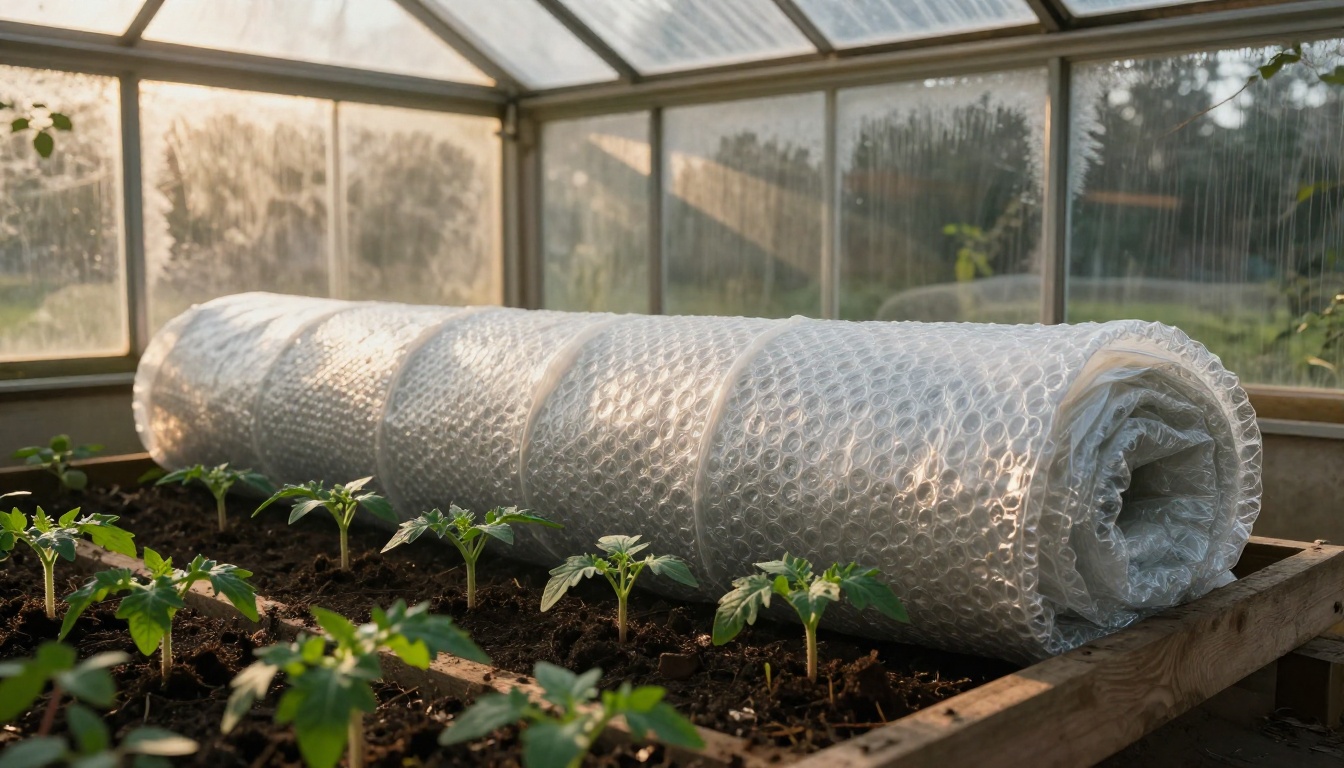
Line walls with bubble wrap for extra R-1. Passive solar south-facing designs help.
- Use ground heaters under benches.
- Combine films over glass.
- Clean panels yearly to maintain R-value.
DIY double-layer film with blower kits. Safety first: vent heaters. These steps keep plants happy cheap.
Build a Warmer Greenhouse Today
Higher R-value traps heat, saves money, and grows strong plants. Polycarbonate often tops lists for balance.
Assess your climate and budget now. Test a panel upgrade this season.
What’s your greenhouse material? Share in comments. Your plants thank you for the cozy upgrade.