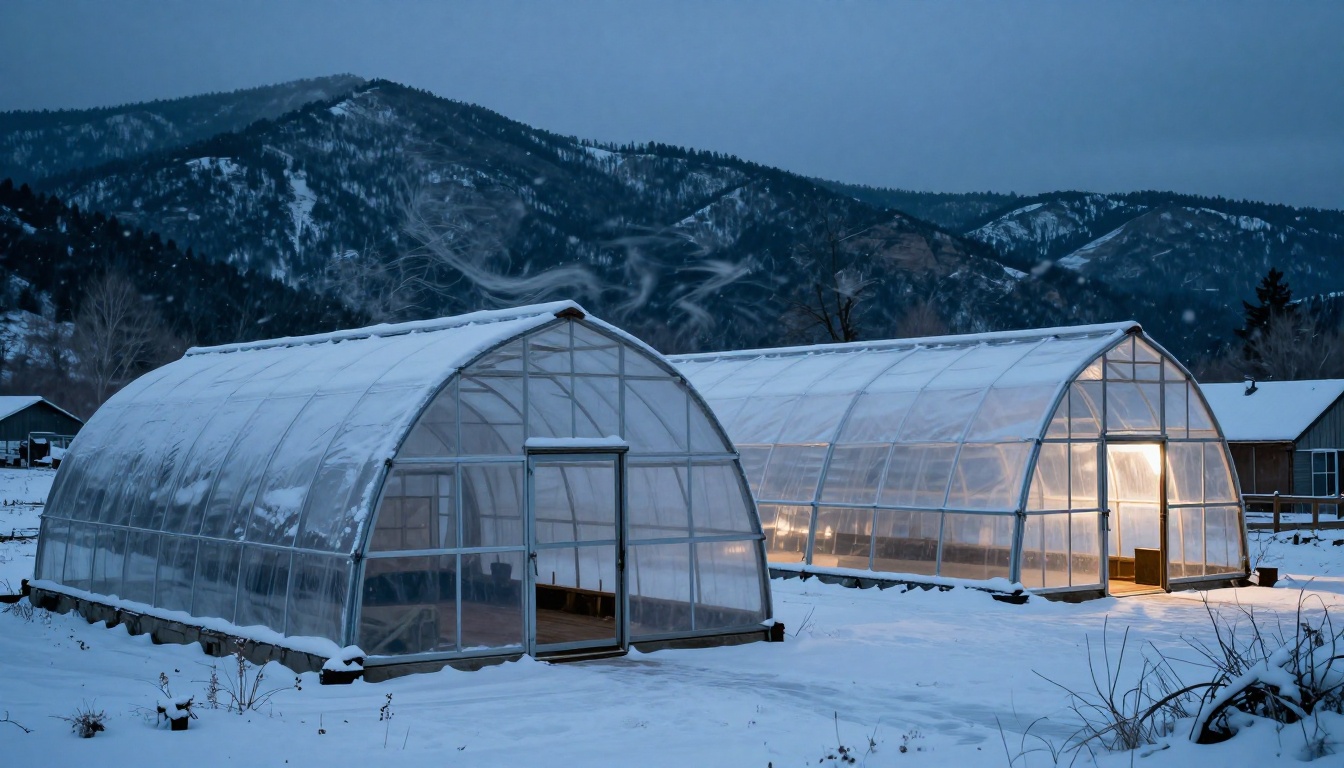
A farmer in Colorado watched his greenhouse collapse under a heavy snow dump last winter. Crops ruined, thousands lost. He used a Quonset shape, that smooth half-circle arch from old military huts. It pooled snow instead of shedding it.
Gothic Arch shapes look like church peaks with pointed tops. Farmers pick these for hoop houses and barns in tough weather spots. Both handle cold and wind, but science shows clear winners.
This post breaks down the physics, tests, and real results. You’ll see which shape fits your area. Expect savings on rebuilds and less worry.
What Makes Quonset and Gothic Arch Shapes Tick?
Quonset huts started in World War II for quick shelters. Their curve spreads loads evenly across the frame. Gothic Arches evolved in the 1900s for greenhouses. Straight sides curve to a sharp peak that sheds water and snow.
Both use steel frames or PVC pipes covered in plastic or metal. Tension pulls materials tight. Compression pushes down on supports. Deflection measures bend under force. These basics explain strength.
Think of Quonset as a dome igloo that hugs the ground. Gothic Arch acts like a tent peak that points loads away. Simple changes in curve make big differences.
Quonset: The Rounded Workhorse
Quonset’s uniform semi-circle distributes snow or wind evenly. No weak spots catch extra pressure. Builders love it for low cost and fast setup. You snap frames together in days.
However, snow slides to the sides and piles up. This creates uneven loads. The parabolic arc works well for steady pressure. But it traps light snow in a U-shape along the curve.
PVC covers flex a bit. Steel holds rigid. Frame spacing matters too. Closer ribs boost strength.
Gothic Arch: The Pointed Powerhouse
Gothic’s peak forces snow toward the edges. Straight legs resist side sway, called racking. The angle cuts the surface where snow sticks.
Physics favors the peak. It reduces flat areas for buildup. Wind hits the point and flows up or around. This design shines in heavy snow zones.
Materials match Quonset’s. But the shape adds natural bracing. Result? Less need for extra supports.
Snow Resistance Showdown: Shedding Pounds Per Square Foot
Snow packs at 20 to 50 pounds per square foot, depending on wet or dry. Density builds over time. Roofs must shed it before collapse.
Quonset’s gentle curve, 0 to 30 degrees slope, holds snow like a valley. Gothic’s peak hits 35 degrees or more. That V-shape funnels loads off fast.
University tests from ag extensions show Gothic sheds 30 to 50 percent more snow. Midwest blizzards proved it. Round barns caved. Peaked ones stood tall.
Calculate safe loads with local data. Multiply snow depth by density. Factor in cover type.
Here’s a quick comparison:
- Quonset: Holds uniform loads well; snow pools on sides (failure at 25 psf average).
- Gothic Arch: High pitch slides snow fast; center stays clear (handles 40 psf+).
- Common factors: Frame spacing under 4 feet, reinforced gutters.
Gothic wins for deep snow. Quonset needs sweeps or heaters.
Physics of Snow Sliding Off Roofs
Friction keeps snow in place below 30 degrees. Above that, gravity wins. It’s the angle of repose.
Quonset stays shallow. Snow sticks until thick. Gothic’s steep pitch drops it early. Simple formula: weight equals depth times density times area.
For example, 12 inches dry snow at 10 pounds per cubic foot loads 10 psf. Add wind, and it compacts more.
Tested Snow Load Limits Face to Face
Lab rigs push simulated loads. Field data tracks storms. Quonset fails around 25 psf without extras. Gothic pushes past 40 psf.
Cover matters. Poly film tears first. Metal panels last longer. Closer frames double capacity.
One study loaded full-scale models. Gothic deflected less at peak loads.
Wind Warriors: Cutting Through Gusts Up to 90 MPH
Wind creates pressure and suction. Gusts up to 90 mph test roofs. Aerodynamics decides survival.
Quonset’s smooth curve cuts drag like a wing. Steady winds slide over it. Low profile hugs ground.
Gothic’s peak disrupts flow. Less uplift on top, but sides take hits. It shines in turbulent gusts from hills.
ASCE codes rate shapes by zone. Quonset leads in hurricanes. Gothic holds in open plains.
Farmers brace both. Cables or knee walls add stability.
How Wind Pushes and Pulls on Curves vs Peaks
Bernoulli’s principle speeds air over curves. This sucks roofs up. Quonset minimizes lift with its arc.
Gothic redirects gusts. Shape factor in codes gives it edge against suction. Side pressure needs strong legs.
Drag coefficients favor rounds in straight blows. Peaks handle swirls better.
Proven Wind Performance from Storms and Labs
Storm reports note Quonset surviving 100 mph steady winds. Gothic farms endured tornado fringes.
Labs spin fans at models. Combo threats like wet snow in gusts hurt curves more. Gothic deflects both.
Coastal spots pick Quonset. Mountains favor Gothic.
Which Shape Wins for Your Location and Budget?
Gothic tops heavy snow north of 40 inches yearly. Quonset suits windy coasts or tight budgets. It’s 20 percent cheaper upfront.
Hybrids mix curves with peaks. Longevity favors Gothic in mixed weather. Quonset needs less maintenance.
Check NOAA for your risks. Climate shifts mean bigger storms. Pick future-proof.
Climate Matchups and Real Farm Stories
Rockies farms swear by Gothic after avalanches crushed rounds. Prairie growers mix both. One Iowa barn stood in 50-inch snow; neighbor’s Quonset sagged.
Texas coasts report Quonset thriving in gales. Failures teach fast.
Cost, Build, and Upgrade Considerations
Quonset kits start at $5 per square foot. Gothic runs $7. Lifetime, Gothic saves on repairs.
DIY Quonset in a weekend. Gothic needs helpers for peaks. Add struts to either for boosts.
The right choice pays back quick.
Gothic sheds snow best with its steep pitch. Quonset fights wind through smooth curves. Base your pick on local weather stats from NOAA.
You’ll harvest without worry. What’s your biggest climate headache? Share below or check greenhouse builders.