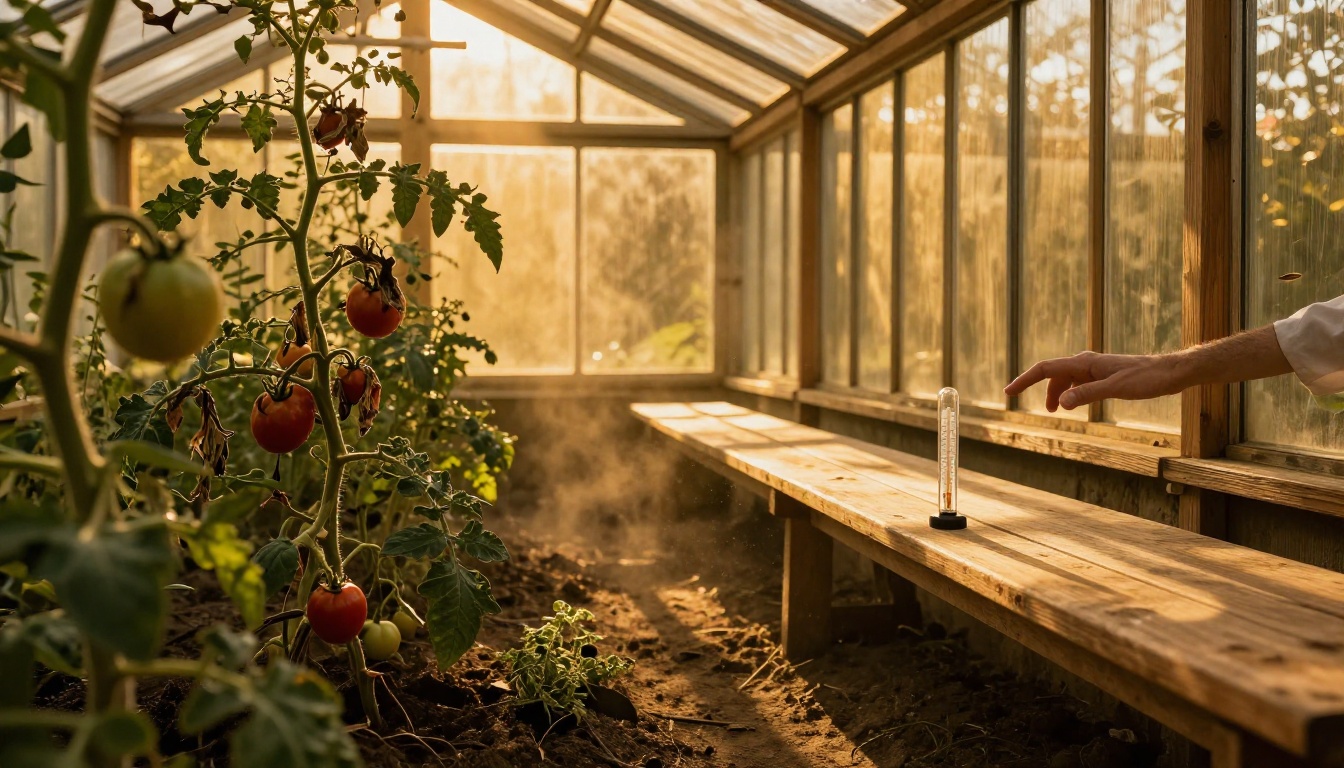
Picture this. You wake up after a storm. Power’s out. Your greenhouse plants look limp and scorched. Heat trapped inside has turned your growing space into a sauna.
Greenhouses overheat fast without fans or vents. Sun beats down. Air stays still. Plants suffer leaf burn, stunted roots, or total loss. Tomatoes curl. Herbs wilt. You need to act now.
This guide shows you how. Spot signs quickly. Find causes. Apply fixes with no power. Build prevention habits. Save your crops today.
Spot the Red Flags: Signs Your Greenhouse is Overheating Now
Check your greenhouse during peak sun hours, around noon. Walk inside. Feel the air. Look close at leaves and soil. Early signs let you save most plants.
Tomatoes show droop first. Herbs yellow at edges. Ignore them, and whole beds die. Use a thermometer if you have one. No tool? Trust your hand. Air hotter than a warm shower means trouble.
| Crop Type | Normal Temp (°F) | Overheating Temp (°F) | Signs to Watch |
|---|---|---|---|
| Tomatoes | 70-85 | Over 95 | Drooping leaves, blossom drop |
| Herbs | 65-80 | Over 90 | Yellow edges, wilting stems |
| Lettuce | 60-75 | Over 85 | Tip burn, slow growth |
This table helps you compare fast. Normal temps keep plants happy. Overheating spikes kill fast. Note patterns in your log for next time.
Visual Plant Clues You Can’t Ignore
Leaves tell the story first. Brown crispy edges mean scorch. Plants wilt even after you water. Flowers drop early.
Seedlings suffer most. They curl tight. Mature plants yellow slow. Touch a leaf gently. It feels soft or dry. That’s heat stress.
Peppers show spots. Basil slows new growth. Check bottoms too. Roots push up from hot soil. Act before half your crop fails.
Air and Surface Heat Checks
Feel the frames. Metal too hot to hold signals danger. Plastic walls steam up inside. That’s trapped moisture and heat.
Insects buzz more in stress. Aphids cluster on weak stems. Open the door. Air rushes out hot. Your skin knows.
Safe check: Hold hand near vent one minute. Can’t stand it? Temps top 100°F. Do this every hour till it cools.
Pinpoint the Culprits: Common Causes in a Powerless Greenhouse
No power stops auto systems. Heat builds quick. Sun cooks plants. Stale air worsens it. Find the main blocks now.
Inspect top to bottom. Closed vents trap most heat. Direct sun hits next. Soil and crowding add fuel. Fix one by one.
Real example: After a calm day, my vents stayed shut. Temps hit 110°F. Plants fried. Simple checks prevent that.
Poor Ventilation Traps Hot Air Inside
Vents close by habit or storm debris. No breeze means hot air pools at top. Roof vents matter most.
Walk around. Push side panels. Check doors seal tight. Windless days double trouble. Air needs to move out.
Inspect hinges. Stuck ones block flow. Open all now. Feel difference in minutes.
Too Much Sun Without Shade Control
Clear plastic lets full rays in. South sides bake in summer. No shade cloth means constant scorch.
Test glare. Shield eyes. Bright spots burn plants below. Shadows stay short at noon.
Covers yellow over time. They block less UV. Check for cracks letting extra heat.
Soil and Moisture Imbalance Fuels Heat
Dry soil heats like a rock. It radiates back up. Overwet beds steam humid air.
Stick finger in pots. Dry two inches down? That’s cause. Mulch gone lets sun hit dirt.
Wet paths trap heat too. No evaporation cools nothing. Balance keeps temps steady.
Crowded Plants Block Cooling Breezes
Dense rows stop air. Leaves touch. Heat sticks between stems.
Count spaces. Less than 12 inches per plant chokes flow. Tall ones shade wrong spots.
Audit paths. Narrow ones trap hot pockets. Breezes skip crowded zones.
Cool It Down Fast: Hands-On Fixes with No Electricity Needed
Drop temps 10-20°F quick. Use hands and home items. Wear gloves for hot spots. Check every 30 minutes.
Target causes. Open air first. Shade next. Water smart. Rearrange last. Plants perk up fast.
Safety first. Move slow. Avoid burns. Most fixes take under an hour.
Manually Open Vents and Doors for Instant Airflow
Prop roof vents with sticks or bricks. Crack side doors six inches. Position for cross breeze.
- Start at top vents. Lift slow.
- Secure with wood. Wind might gust.
- Open opposite door. Air pulls through.
- Check pests later. Cooling saves plants.
Pests sneak in. Net if worried. Airflow drops heat most.
Add Shade with Everyday Materials
Drape old sheets over frames. White side out reflects sun. Cardboard boxes work on ends.
Place outside panels. Avoid full dark. 50% shade cools best.
Paint outside white with lime wash. It blocks rays. Rinse off later. Sheets drop temps 15°F.
Water Smart to Evaporate Heat Away
Mist leaves light in evening. Soak paths between beds. Deep water roots morning time.
Evaporation pulls heat. Don’t soak leaves midday. Sun burns wet spots.
Fill buckets from rain barrel. Drip slow on soil. Paths stay damp for hours.
Rearrange for Better Air Circulation
Shift tall plants to edges. Thin crowded herbs. Prune dead leaves.
- Pull weak stems.
- Space pots 18 inches.
- Clear paths full width.
Dead bits trap heat. Remove boosts flow. Plants stand taller quick.
Prevent Future Overheats: Build a Tougher Greenhouse Setup
Power fails often. Build natural cooling in. Tweak design. Choose smart plants. Form habits.
April 2026 brings early heat in the US. Springs warm fast. Prep now for summer peaks.
Your setup lasts years. Off-grid gardening thrives.
Design Natural Ventilation from the Start
Add roll-up sides. Place vents high and low. Chimney effect pulls hot air up.
Cut windows in ends. Hinges cost little. Screens block bugs.
Slope roof vents out. Rain sheds off. Breeze flows free.
Pick Heat-Tolerant Plants and Smart Layouts
Grow peppers or okra. They love 90°F. Skip lettuce in peaks.
Space 24 inches for vines. Companion plant basil near tomatoes. Air moves better.
Group short with tall. Breezes reach all. Rotate beds yearly.
Daily Manual Habits That Save the Day
Check vents at dawn. Prep shades for noon. Log temps daily.
Watch weather apps. Storm means close doors early. Kit ready: sticks, sheets, nets.
Track patterns. Hot spells repeat. Habits drop risks 80%.
Quick fixes save plants today. But prevention builds success. You spotted red flags like drooping leaves and hot frames. You found traps such as closed vents and dry soil. Hands-on moves cool fast: open air, add shade, water wise, rearrange.
Most crops bounce back if you act in hours. Tomatoes fruit again. Herbs fill beds.
Share your fix story in comments. What worked best? Subscribe for more off-grid tips. Garden strong without power.