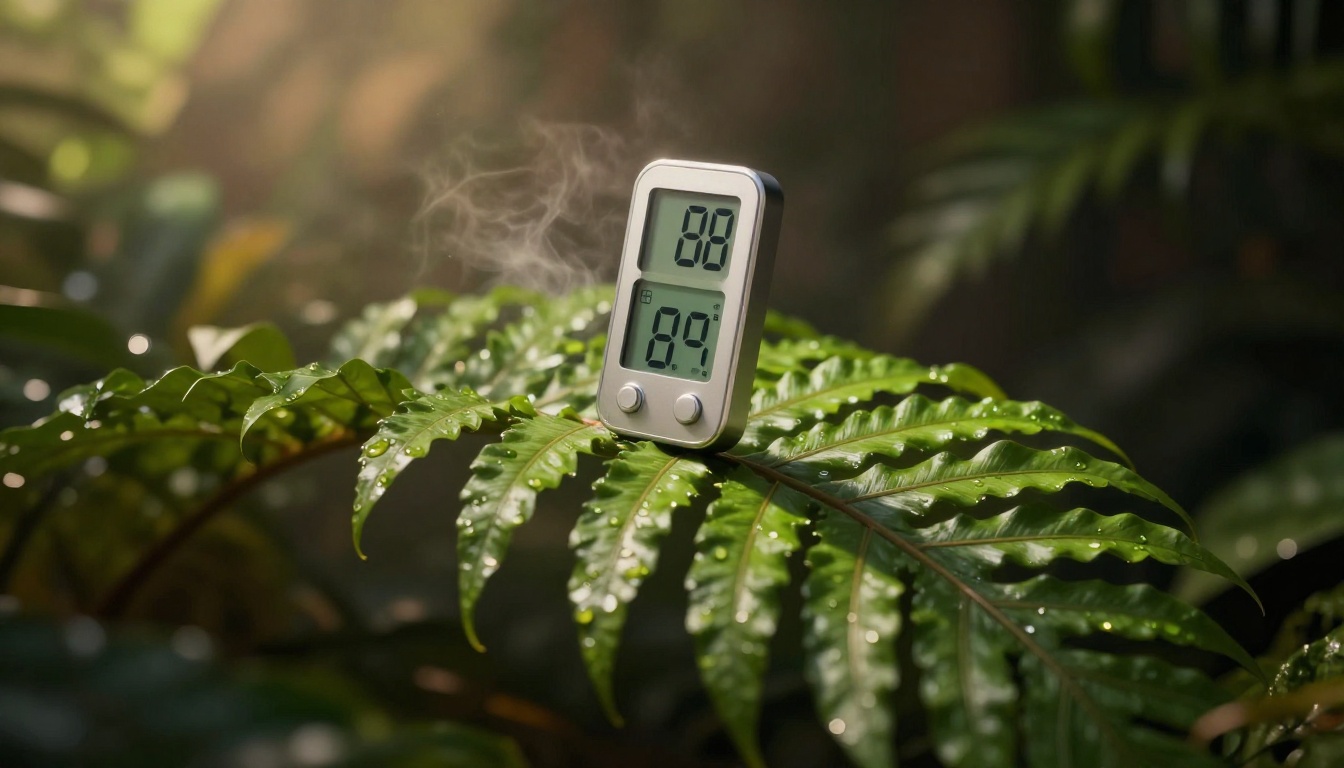
Picture this: you walk into your living room after a long day, eager to check on your lush ferns. Instead, you find droopy leaves and brown tips staring back at you. Low humidity snuck up and wrecked your plants overnight.
That’s a common heartbreak for new plant parents. Relative humidity measures the moisture in the air compared to how much it could hold at that temperature. If it dips too low, your tropical babies suffer; if it’s too high, mold takes over.
You can fix this fast with a hygrometer. This simple tool gives accurate readings so you spot problems before they hit. No more guesswork or wilted dreams.
In this post, you’ll grasp relative humidity basics, pick the right hygrometer for your setup, follow easy steps to measure it, learn ideal levels for different plants, and get maintenance tips to keep readings spot-on. Ready to give your greens the care they crave? Let’s dive into relative humidity first.
What Relative Humidity Means for Your Plants’ Happiness
Relative humidity shows the percentage of water vapor in the air compared to the maximum it can hold at a given temperature. Think of it like a sponge: in dry winter air, that sponge stays parched; after a steamy shower, it soaks up everything. Plants rely on this balance because it affects transpiration, where leaves release moisture, and photosynthesis, their food-making process.
Low RH causes crispy leaf edges and slow growth since plants lose water faster than they take it up. High RH, on the other hand, leads to fungal spots and root rot because excess moisture clogs stomata, those tiny leaf pores. You notice it first on tropicals like fiddle leaf figs in heated homes or succulents in damp basements.
Here’s a quick chart of general RH effects on common houseplants:
| RH Level | Effects on Plants | Ideal For |
|---|---|---|
| Below 40% | Crispy tips, pest invasions, stunted growth | Succulents, cacti |
| 40-60% | Balanced transpiration, healthy growth | Most houseplants like pothos, snake plants |
| Above 60% | Mold risk, yellowing leaves, root issues | Ferns, calatheas, orchids |
Monitoring keeps your plants thriving, so they stay vibrant instead of struggling.
Common Plant Problems Tied to Wrong Humidity
Wrong humidity triggers specific troubles you can catch early with a hygrometer. For instance, spider mites love low RH under 40 percent; they suck sap from leaves, leaving fine webs and yellow speckles. Picture tiny red dots crawling on your ficus undersides.
In high RH over 70 percent, powdery mildew flourishes, coating leaves with white powder, as if dusted with flour. Other issues include root rot from soggy soil, where roots turn mushy and black, and leaf spot fungi that create brown blotches. Aphids also surge in dry air, clustering on new growth.
Hygrometer readings alert you fast: dip below 50 percent on a peace lily? Boost humidity now. Spot 80 percent on a jade plant? Improve airflow. Regular checks prevent these pests and diseases, so your plants grow strong and pest-free.
Why Temperature Matters in Humidity Readings
Relative humidity shifts with temperature because warmer air holds more moisture. At 70 degrees Fahrenheit, air might hit 50 percent RH; crank it to 80 degrees, and that same moisture drops to 30 percent. Plants feel the change instantly.
That’s why you need a thermo-hygrometer, which tracks both temperature and RH together. It shows the full picture, unlike basic hygrometers. In short, the formula boils down to RH equals actual vapor pressure divided by saturation vapor pressure at that temperature.
Use one in your grow tent or living room. Adjust misting or heaters based on combined readings. Your monstera thanks you with lush leaves instead of stress.
Choosing a Hygrometer That Gives Reliable Results
You need a hygrometer that matches your plants and space. Analog models cost less but require tweaks. Digital ones offer sharp accuracy, while smart versions connect via WiFi for phone alerts. Look for +/-3% accuracy, temperature readouts, data logs, and easy placement. Budget options run under $20; mid-range picks hit $30 to $50. For small shelves, go analog. Serious collections or grow tents demand digital or smart. In short, your plant count guides the choice: beginners stick simple, big setups go advanced.
Consider grow tent users first. They face tight, humid spots, so probe options shine for soil checks too. Room growers prefer battery lasts months without fuss. Here’s a quick pros and cons breakdown:
| Type | Pros | Cons | Best For | Price Range |
|---|---|---|---|---|
| Analog | Cheap, no batteries, simple | Needs regular calibration, less precise | Small rooms, few plants | Under $20 |
| Digital | Accurate, logs min/max, alarms | Batteries die, basic displays | Medium collections, tents | $20-50 |
| Smart | App tracking, remote alerts | Higher cost, WiFi needed | Large setups, busy growers | $50+ |
This table helps you weigh options fast. Pick based on your needs, because reliability beats regrets.
Analog Hygrometers: Simple and Affordable
Analog hygrometers use hair tension or wet bulb methods. Hair types stretch with moisture, moving a needle across a scale. Wet bulb ones compare dry and damp thermometers for RH. You get basics without plugs.
Calibrate them often with a salt test. Mix table salt and water in a jar; it hits 75% RH. Place your hygrometer inside overnight. Adjust the screw if off by more than 5%. Repeat monthly, because drift happens.
These suit small setups like windowsills. Your pothos or snake plant stays happy without extras. However, avoid big collections; readings fade over time.
Digital Hygrometers: Precision for Serious Growers
Digital hygrometers pack LCD screens for clear views. They track min and max RH over days, so you spot drops fast. Alarms beep at set levels, like under 40% for succulents.
Batteries last six months or more. Some include probes for soil humidity combos, perfect for tents. You plug in, and it reads air plus dirt moisture. Apps on mid-range models log data for trends.
For your fiddle leaf fig or calathea, these deliver. Place one near leaves, not vents. Serious growers love them because precision prevents crispy tips. If you manage 10+ plants, upgrade here; analogs fall short.
Step-by-Step: Measuring Humidity Like a Pro
Ready to measure relative humidity with confidence? These steps turn you into a plant humidity expert. First, calibrate your device for true accuracy. Next, position it smartly. Then wait for stable readings, track patterns, and check multiple spots if needed. You’ll avoid common mistakes like jumpy numbers from bad batteries or drafts. In short, follow along, and your plants get the steady care they need.
Calibrating Your Hygrometer for Spot-On Accuracy
Start here because uncalibrated tools lie. Most hygrometers drift over time, especially analogs. You fix that with a simple salt test. It creates a 75% RH standard right at home.
Grab these supplies: table salt, distilled water, a small airtight plastic bag or jar lid, and cotton balls or tissue. Mix two tablespoons of salt with one tablespoon of water until it feels like wet sand. It won’t dissolve fully; that’s good. Spoon the mix into the bag or lid.
Place your hygrometer next to it inside a sealed bag or container. Seal tight and leave overnight, about 8-12 hours. Room temperature works best, around 70 degrees Fahrenheit. Check the reading. It should hit 75% RH, plus or minus 3 percent.
If off, adjust. Analogs have a small screw on the back; turn it gently with a screwdriver until the needle points to 75%. Digital models often self-adjust or reset via buttons; check your manual. Test again after 30 minutes. Repeat monthly, because accuracy fades.
This method beats manufacturer claims. For example, your new digital hygrometer might read 10% low out of the box. Calibration catches that fast. As a result, you trust every reading for your calatheas or succulents.
Quick tip: Use sodium chloride table salt only. Other types skew results.
Test twice a year if you store it away. Clean the sensor first with a dry cloth. Avoid water; it damages electronics. Now your tool shines ready.
Best Places to Position Your Hygrometer
Position matters as much as calibration. Wrong spots give false highs or lows. Keep it away from doors, windows, AC vents, heaters, and direct sun. Those cause wild swings.
Aim for canopy level, about 12-18 inches above soil or at leaf height. Plants feel humidity there most. In open rooms, clip it to a middle shelf near your pothos cluster. Avoid floors; dust and cold air mess readings.
Terrariums differ. Place inside near the center, not touching glass or soil. Glass traps moisture unevenly. For enclosed cases, readings stabilize faster. Open rooms need more patience because air mixes.
Here’s how to nail placement:
- Secure with a stand or magnetic back; suction cups work on smooth surfaces.
- Keep 2-3 feet from humidifiers or dehumidifiers.
- In grow tents, hang midway up a pole, away from fans.
After placing, wait 30-60 minutes. Air settles, and numbers steady. Jumpy readings? Check batteries first. Low power causes glitches. Reposition if drafts hit.
Record readings twice daily for 24 hours. Note time, RH, and temperature. Patterns emerge, like nighttime spikes from poor ventilation. Large rooms demand multiple units: one per zone, say living room and bedroom.
Troubleshoot smart. If numbers drop suddenly, inspect for condensation on the sensor; wipe dry gently. Safety first: never submerge in water. Use protective cases near misting areas.
Your fiddle leaf fig thrives when you measure right. Steady 50-60% RH keeps leaves plump. Mistake spots early, and pests stay away. Keep at it, and humidity control becomes second nature.
Perfect Humidity Ranges to Keep Your Plants Thriving
You measure relative humidity now with your hygrometer. Next, match those numbers to what your plants crave. Each type has sweet spots that boost growth and ward off issues. Hit the right range, and you see plumper leaves, faster blooms, and stronger roots. Miss it, and stress shows fast. General rules split into low, medium, and high needs, but tweak for seasons too. Winter drops RH, so aim 10 percent higher. Nighttime often needs a bump because plants transpire less then.
Humidity Needs for Popular Houseplants
Different plants hail from varied climates, so their RH demands differ. Succulents and cacti thrive low at 30-40 percent; they store water and hate damp air. Most houseplants like pothos or ZZ plants prefer medium 40-60 percent. Tropicals, ferns, and calatheas demand high 60-80 percent. Seedlings need even more, 70-90 percent, to root well.
Check this quick reference table for common picks:
| Plant Type | Ideal RH Range | Signs of Low Humidity | Signs of High Humidity |
|---|---|---|---|
| Succulents/Cacti | 30-40% | Wrinkled leaves, slow growth | Root rot, mushy stems |
| Snake Plant | 30-50% | Brown tips, curled edges | Yellow leaves, soft spots |
| Most Houseplants | 40-60% | Crispy edges, pest attacks | Fungal spots, weak stems |
| Monstera | 50-70% | Droopy leaves, stunted vines | Mold on soil, leaf blotches |
| Orchids | 60-80% | Bud drop, wrinkled pseudobulbs | Black rot, bacterial ooze |
| Tropicals/Ferns | 60-80% | Dry fronds, spider mites | Powdery mildew, leaf drop |
| Seedlings | 70-90% | Wilting, poor rooting | Damping off, fuzzy growth |
Spot these signs? Adjust right away. For example, your monstera at 40 percent crisps up because it misses rainforest vibes. Orchids below 60 percent drop buds; push higher for spikes. In summer, steady levels speed growth. Winter heat dries air, so monitor daily. As a result, your snake plant stays upright and vibrant at 40 percent.
Adjusting Humidity Without Fancy Gear
No budget for gadgets? Simple tricks raise or lower RH fast, perfect for apartments. Start with misting; it bumps levels 5-10 percent for an hour. Spray leaves morning only to dry before night. Group plants close; they create a humid microclimate as transpiration builds moisture.
Pebble trays work wonders too. Fill a shallow dish with pebbles and water to just below tops. Set pots on them; evaporation lifts RH 10-15 percent nearby. Refresh water weekly to avoid stagnation. Bowl humidifiers beat that: hang bowls from shelves or place near groups. Add hot water for quick steam.
In small spaces, these stack up. For instance, cluster your ferns on a tray; they hit 70 percent easy. Too high? Crack a window or add a fan for airflow. Dehumidifiers drop excess if over 80 percent, but fans often suffice first. Test with your hygrometer after changes. You see bigger leaves and fewer pests in weeks. These methods keep costs low while your plants flourish.
Conclusion
You hold the key now. Grab your hygrometer, calibrate it with a salt test, and place it at canopy level. Measure relative humidity daily, so you spot drops before they harm leaves.
Know your plants’ needs next. Succulents thrive below 40 percent. Tropicals like ferns demand 60 percent or more. Adjust fast with pebble trays or fans; your readings guide every move.
Those droopy ferns from the living room won’t return. Steady humidity builds plump leaves and strong growth. You turn heartbreak into lush success.
Pick up a hygrometer today if you haven’t. Test your space right now and note the changes.
Share your RH readings in the comments. What surprised you most? Read our guide on the best humidifiers for plants next.